


For decades, the digital world has been a separate reality, confined to the two-dimensional screens of our computers and smartphones. To interact with technology, we’ve had to look down, tap a screen, or type on a keyboard, creating a cognitive and physical barrier between our digital and physical lives. The smartphone, while a revolutionary tool, has created a world where we are constantly tethered to a small screen, disconnected from the very reality we are trying to experience.
But a profound and necessary shift is underway. A new generation of immersive technologies, known as Augmented Reality (AR) and Virtual Reality (VR), is poised to fundamentally reshape this relationship. AR and VR are not just screens you wear; they are a window into a new form of reality, a world where the digital and the physical are seamlessly blended. This is not just a technological advancement; it is a profound paradigm shift that will free us from the constraints of the screen and unlock a new era of immersive, intuitive, and collaborative computing. This article will provide a comprehensive guide to what AR and VR are, the key pillars that are driving their revolution, the major industries that are being transformed, and the profound ethical and technological challenges that this new technology holds for the future of humanity.
The Limits of the 2D Screen

To understand the power of AR and VR, one must first grasp the flaws of the traditional 2D interface. This old paradigm, while effective for a long time, has a number of significant flaws that are becoming increasingly apparent in a modern world.
- A Flat World and a Limited View: A 2D screen is a flat world that has a limited view. We are forced to look at a screen, which can be a source of a new and profound form of digital fatigue and a lack of connection to the real world.
- The “Tethered” Experience: We are tethered to a physical object, such as a smartphone or a laptop, to interact with a digital world. This can be a source of a new and profound form of physical and cognitive bottleneck.
- A Lack of Contextual Awareness: A screen is a tool for a specific task—to read a news article or to watch a video. It has no ability to, for example, provide a person with a new level of contextual awareness. A person may be looking at a building, but they have no ability to get a new level of information about the building’s history or its architecture.
- A “One-Size-Fits-All” Experience: The traditional 2D screen is a “one-size-fits-all” experience. A person is forced to interact with a digital world in a specific way, with a specific set of tools and a specific set of rules. This can lead to a lack of a new idea, a lack of a new perspective, and a lack of a shared understanding of the world.
The old paradigm is no longer viable. It is a system that is built for a different era, and it is now being replaced by a new one that is more intuitive, more immersive, and more collaborative.
A Primer on Immersive Tech
AR and VR are a new model for a wearable device that is designed to solve the flaws of the traditional smartphone paradigm. They are a technological leap that is built on a new generation of technologies.
- Augmented Reality (AR): AR is a technology that can overlay a digital image onto the real world. It is a system that can, for example, overlay a digital image of a car on a real road, or a digital image of a building on a real street. This is a new and more immersive way to interact with the digital world, and it is a new and more powerful way to get a new level of information and a new level of contextual awareness.
- Virtual Reality (VR): VR is a technology that can create a fully immersive virtual world. It is a system that can, for example, put a person in a virtual world where they can interact with other people and with a new generation of digital objects. This is a new and more immersive way to interact with the digital world, and it is a new and more powerful way to have a new experience.
- From Screen to Interface: The term “AR/VR” is often used to describe a new form of a headset, but the new generation of AR and VR is a new and more immersive experience. It is a virtual world that is designed to be a new and more interactive form of a real world.
The AR/VR revolution is a new chapter in the story of human-machine integration, one that is being written by a new generation of visionaries and entrepreneurs.
Key Pillars of the AR/VR Revolution
The AR/VR revolution is built on a set of core principles that are fundamentally changing the way we think about technology. These principles are making technology more intelligent, more aware, and more capable than ever before.
A. The Power of “Presence” and Shared Experiences:
This is the most significant advantage of AR/VR. AR/VR can create a new and powerful sense of being in the same room as another person, which can lead to a new and more profound sense of connection.
- A New Level of Emotional Connection: The ability to see a person’s full body and to read their body language can lead to a new and more profound level of emotional connection. This is a crucial step towards creating a more empathetic and more connected world.
- A New Sense of Shared Place: The ability to be in the same virtual space as another person, even if they are thousands of miles away, can lead to a new and more profound sense of shared place. This is a powerful tool for a variety of industries, from corporate meetings to family gatherings.
B. A New Form of Interaction and Intuitive Design:
AR/VR is a new form of computing that is designed to be hands-free. A person can, for example, use their voice, their gaze, or a gesture to interact with technology.
- Voice and Gaze Control: A person can, for example, use their voice to give a command, their gaze to select an option, or a gesture to grab a virtual object. This is a new and more intuitive way to interact with a digital world.
- The “Human-in-the-Loop” Model: The future of AR/VR will be defined by a new era of human-in-the-loop computing, where a human and a machine work together to create a new form of value. A human can provide the creative direction, and a machine can provide the raw material.
C. The Democratization of the Digital World:
AR/VR is a new form of computing that is designed to free us from the constraints of the screen.
- A New World of Experiences: A person can, for example, use an AR/VR headset to experience a new and more immersive form of a learning experience, a new form of entertainment, or a new form of social interaction.
- A New Level of Accessibility: The use of AR/VR can, for example, be a new and more accessible form of a learning experience. A person with a physical disability can, for example, use a VR headset to explore a virtual world.
D. Beyond the Screen: A New Era of Ubiquitous Computing:
AR/VR is a new form of computing that is designed to free us from the constraints of the screen.
- Ubiquitous Computing: AR/VR can be used in any physical space, from a boardroom to a factory floor. This can help to create a new era of ubiquitous computing, where technology is seamlessly integrated into our physical world.
- A New Form of Interaction: The AR/VR is a new form of interaction that is designed to be more intuitive, more immersive, and more collaborative than a traditional interface. This is a profound shift that will fundamentally reshape the way we interact with technology.
Major Industries Being Transformed
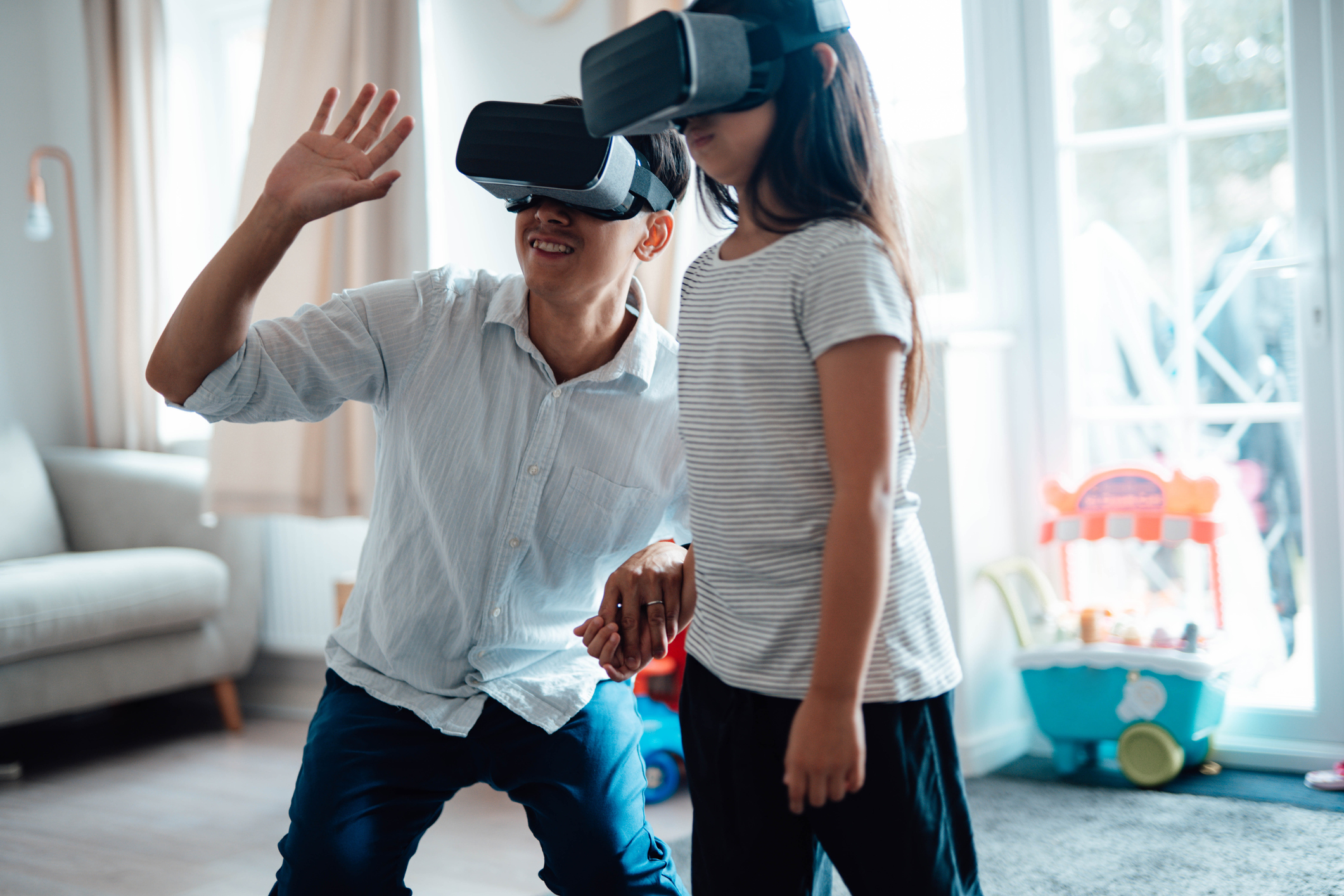
The impact of AR/VR is not limited to a single sector; it is a transformative force that is reshaping every industry.
- Healthcare and Medical Training: The healthcare industry is on the cusp of a revolution. AR/VR can be used for surgical planning, medical training, and a new generation of remote medical consultation.
- Manufacturing and Engineering: The manufacturing and engineering industries are on the cusp of a revolution. AR/VR can be used to design and prototype new products in a 3D environment and to provide a worker with a new level of information on a factory floor.
- Education and Learning: The education industry is on the cusp of a revolution. AR/VR can be used to create a new generation of immersive and interactive learning experiences. A student can, for example, use AR/VR to see a historical event in a real physical space.
- Retail and E-commerce: The retail and e-commerce industries are on the cusp of a revolution. AR/VR can be used to create a virtual storefront, a virtual try-on experience, and a new form of immersive advertising.
The Technological and Ethical Challenges
While the potential of AR/VR is immense, the path to widespread adoption is not without its challenges. The technology is still in its early stages, and the regulatory framework is struggling to keep up with the pace of innovation.
- High Initial Cost: The cost of building an AR/VR headset, particularly a large one, can be high. This can be a major barrier to adoption for a small business or a community that is operating on a tight budget.
- Data Privacy and Security: The use of a virtual world has a new and profound set of privacy and security concerns. The potential for a virtual world to be used for mass surveillance or to collect a person’s personal information is a new and dangerous threat.
- The “Human” Question: The rise of AR/VR is forcing a deeper, philosophical debate over what it means to be human. If a person can use a virtual world to live in a virtual world, are they still connected to the real world? The legal and ethical implications of this question are profound.
Conclusion
The AR/VR revolution is not just another technological advancement; it is a fundamental re-imagining of how we interact with technology. It has the power to unlock new levels of intelligence, dexterity, and a new sense of connection for millions of people around the world. The companies and governments that are leading this charge are not just building a new technology; they are laying the foundation for a new era of ubiquitous computing.
The future of technology will not be defined by a world where a person is limited by a 2D screen. Instead, it will be defined by a world where a AR/VR is a new and more immersive experience, and where a new level of connection and learning is possible. The journey is far from over, but the progress has been undeniable. The most successful societies of the future will be those that can master the principles of AR/VR and use them to create a more efficient, more creative, and more equitable world.







Discussion about this post